
Cooking basic
How to line a baking tin
Measure, fold and fit baking parchment in loaf, square and round tins or on a flat tray.
Lining stops a bake sticking and can give you handles for lifting it out. Use baking parchment sold as suitable for oven use, and check the pack’s maximum temperature is at least as high as the recipe requires. Do not use greaseproof paper unless its pack specifically says it is suitable for baking.
Before you cut
Lightly grease the tin with a little butter or oil, preferably from the amount already measured for the recipe. The thin coating holds the paper in place; a thick layer can leave greasy edges.
Set the tin on the parchment to judge the length and width before cutting. Fold or mark the paper where it must turn up the sides. Press each fold firmly on a flat surface, then fit the paper into the tin and run your fingers into the corners. Trim excessive overhang so it cannot touch a heating element or flame, while keeping any lifting handles the recipe needs.
Line a loaf tin
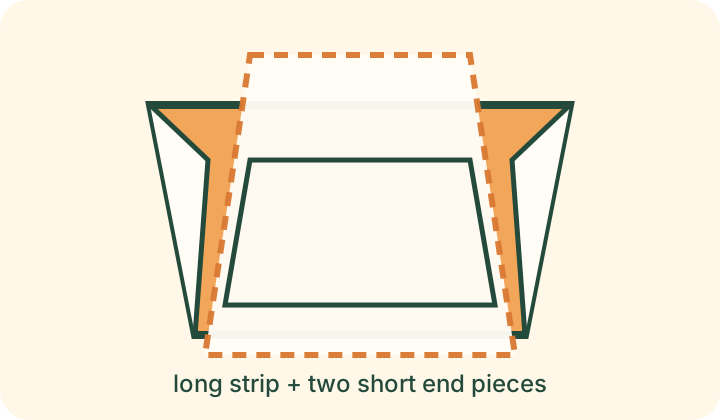
Cut one long strip to cover the base and both long sides, with a few centimetres above the rim for lifting. Cut two smaller pieces for the short ends. Lightly grease the paper where the pieces overlap, press the end pieces into place and crease all four bottom corners.
Line a square tin
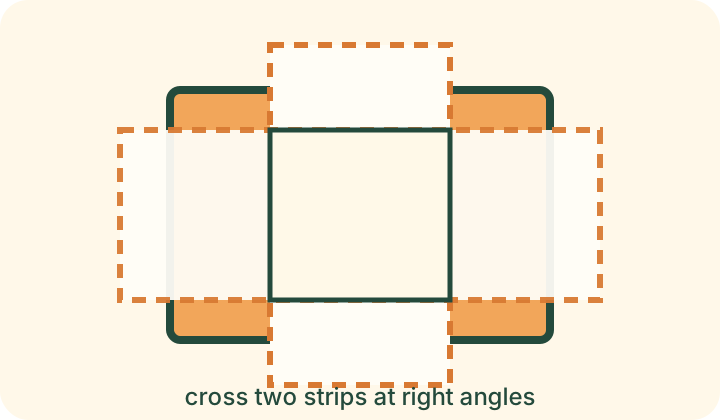
Cut two strips as wide as the tin. Lay the first across the base and up two opposite sides, then turn the tin a quarter-turn and lay the second strip across it. The crossed strips cover all four sides and leave lifting handles. Press both layers into the corners without tearing them.
Line a round tin
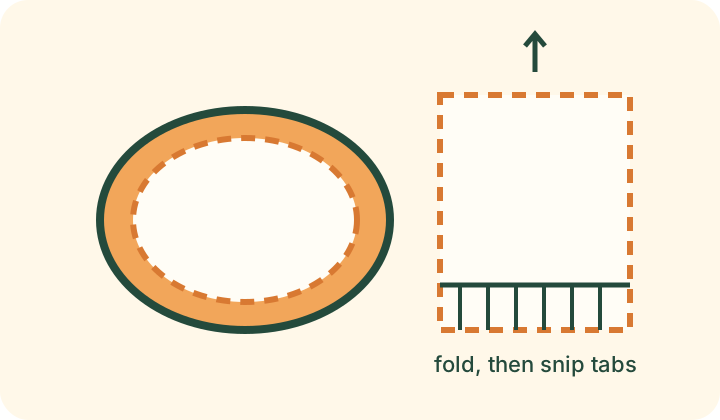
For the base, put the tin on the parchment, draw around it and cut just inside the line so the circle fits flat. For the side, cut a strip as long as the tin’s circumference and a little taller than the tin. Fold about 2 cm along one long edge, then make short snips from that edge up to the fold. Fit the strip around the greased side with the snipped tabs lying flat on the base, and place the parchment circle over the tabs.
Line a flat baking tray
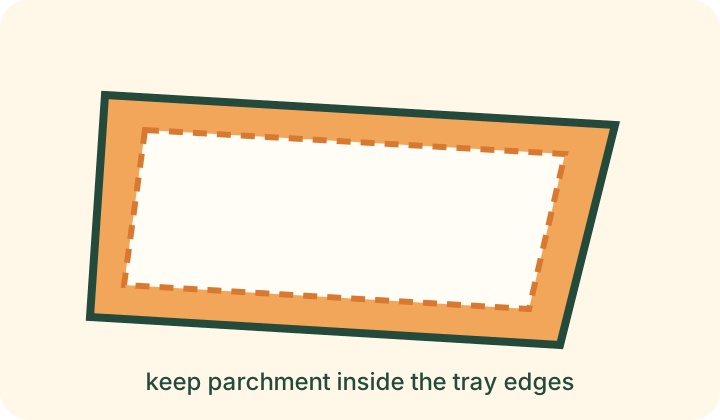
Cut a sheet to sit flat within the tray edges. A tiny dab of grease at each corner can stop it moving, though cookie dough often holds it in place. Do not let loose parchment extend over the tray or near exposed heating elements or flames.
After baking, follow the recipe’s cooling instructions before using the paper handles. Hot cakes can break, while brownies and flapjacks often need time to set in the tin. Lift with both handles together and support a heavy bake underneath when moving it.